The prime ministers of Greece and Macedonia Alexis Tsipras and Zoran Zaev said emerging from three hours of talks in Davos that the moment had come to solve the Macedonia naming dispute. The international mediator in the dispute Matthew Nimetz paid consecutive visits to Athens and Skopje for talks with the political leaders of the two countries. All this has left the impression of a new dynamism of negotiations.
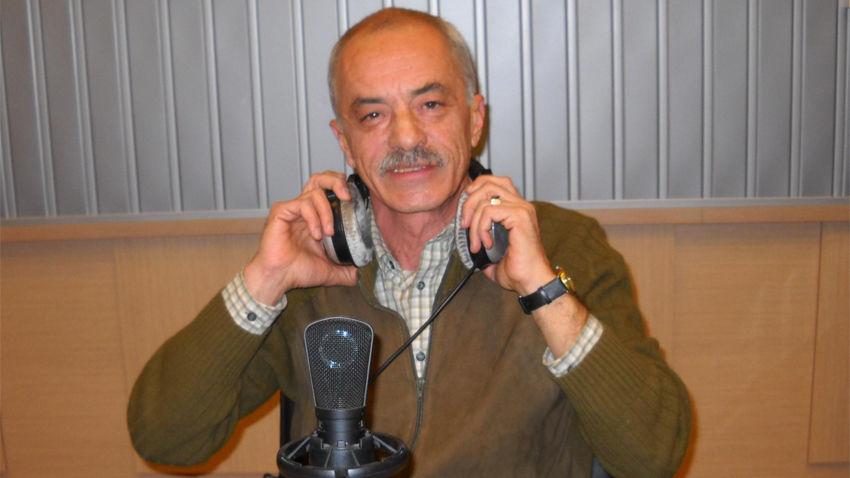
“The process has definitely become more dynamic and my personal view is that given that the dispute has been going on for longer than quarter of a century, it is really the moment now when practical conditions have been created for breaking the deadlock, said Martin Minkov who has for many years served as Bulgarian National Radio correspondent to Skopje. All the more so that for many including the EU and NATO this dispute is a riddle. We have a specific Balkan sensibility here, in this part of the world, we know our history and for us this state of affairs is familiar. But a moment comes when it is crystal clear that things can no longer go like this. From this point of view – yes, there is room for optimism right now, but not for euphoria.”
Talking to Radio Bulgaria, Martin Minkov termed optimistic also the time frame from several weeks to several months which Matthew Nimetz has set.
“To what Matthew Nimetz said in Skopje yesterday, I would add an interview that I find interesting – given by the head of the Greek diplomacy Nikos Kotzias to Reuters in which he makes an explicit commitment that a settlement of the dispute is possible by June. Asked what would happen if the dispute was not settled by June, he said: “It will be settled.”Most probably there is disposition with both governments – in Athens and Skopje, for moving together towards a compromise scenario in establishing a new official compound name that should replace the rather humiliating abbreviation FYROM /the Former Yugoslav Republic of Macedonia/. With this however the process won’t come to an end. What will follow is the more difficult part – regulating relations, interpretation of how the name will be applied, whether the change will necessitate an amendment to the Constitution of the Republic of Macedonia, whether necessary guarantees will be provided for giving up any kind of irredentism. Mind you that for Greece this is a key problem – giving up the policy of irredentism which according to Athens, Skopje pursues – especially during the term of its former government of Gruevski and VMRO-DPMNE. Macedonia in turn has made quite clear that it would under no circumstances agree to whatever negotiations concerning the identity of the people of the Republic of Macedonia.”
International analyst Martin Minkov explains that Macedonia would benefit from exiting its current state of international isolation and from opening its Euro-Atlantic perspective:
“And the first important step that it made was accomplishing a treaty with Bulgaria. From this point of view I think that this country as a partner of the Republic of Macedonia, has given a good example how a step forward can be made based on mutual compromise. I hope that the example of Bulgaria and Macedonia will be compelling. As to the position maintained by Greece, allow me to quote a highly respected and pragmatic politician – the Mayor of Thessaloniki, Yiannis Boutaris who said, “What are we doing? We cannot go on calling those people Skopjans, Gypsies etc. We compromise ourselves in front of our partners, lose economic benefits and lose political weight.” So, time has come for more pragmatism and I think that the whole region is set to benefit from this. And Bulgaria, as a country on friendly terms with both the Republic of Macedonia and the Republic of Greece will benefit from the settlement of this long-running dispute.”
Will Bulgaria be able to claim a successful EU Presidency in terms of its Balkan priority in case the dispute is settled?
“Definitely, and we should also bear in mind that Bulgaria’s prioritizing the European perspective of the Western Balkans is a most logical thing. This however does not spell automatic accession. Each of the region’s countries starting with our immediate neighbors Macedonia and Serbia, passing through Albania, Bosnia-Hercegovina and Kosovo – has to travel its own way. But they have to be guided by a roadmap of sorts and be aware that by following this path they will sooner or later become part of the European family. And this as we know takes from 7 to 10 years. The settlement of the Macedonia naming dispute however is of key importance, because after it there is another big problem in the Balkans – the one that relates to defining of both the relations and borders between the Republic of Serbia and the Republic of Kosovo. Given a single perspective for more stability via membership of NATO and a perspective of EU accession, the situation will be far calmer and will rule out further, God forbid, actions leading to the use of force.”
English Daniela Konstantinova
The deadline for the start of the implementation of the new European Media Freedom Act (FEMA) is fast approaching - August this year. "Some Member States are already quite far in implementing the European Media Freedom Act because some of..
It’s official—Bulgaria is now the 21st country in the eurozone. From 1 January 2026, the euro will become the legal tender, although levs will still be accepted for another month. Bulgaria becomes the 21st member of the Eurozone “I think..
"What we have let slip, we have let slip over the last 20 years, not yesterday or the day before." This was stated to the Bulgarian National Radio by Ivaylo Valchev, MEP from the European Conservatives and Reformists (ECR), before today's vote in..


 Cloudy
 Mostly Cloudy
 Partly Cloudy
 Fog
Fog