Bulgaria is famous as the country of roses. It has long been among the leaders in rose oil production, but those employed in the sphere have raised the alarm over a number of issues, some of which have been neglected for years. If we add to them the current Covid-19 pandemic, one cannot miss the stormy clouds gathering over Bulgarian rose production and processing business.
The colder and unstable weather this year has delayed the start of harvesting by about two weeks and rose picking will start after May 24, but this does not solve the problem of lack of the necessary work force. The low purchase price of 75 to 90 euro cents per kilogram of rose flowers does not allow rose growers to pay their workers the current wage of 50 euro cents per kilogram.
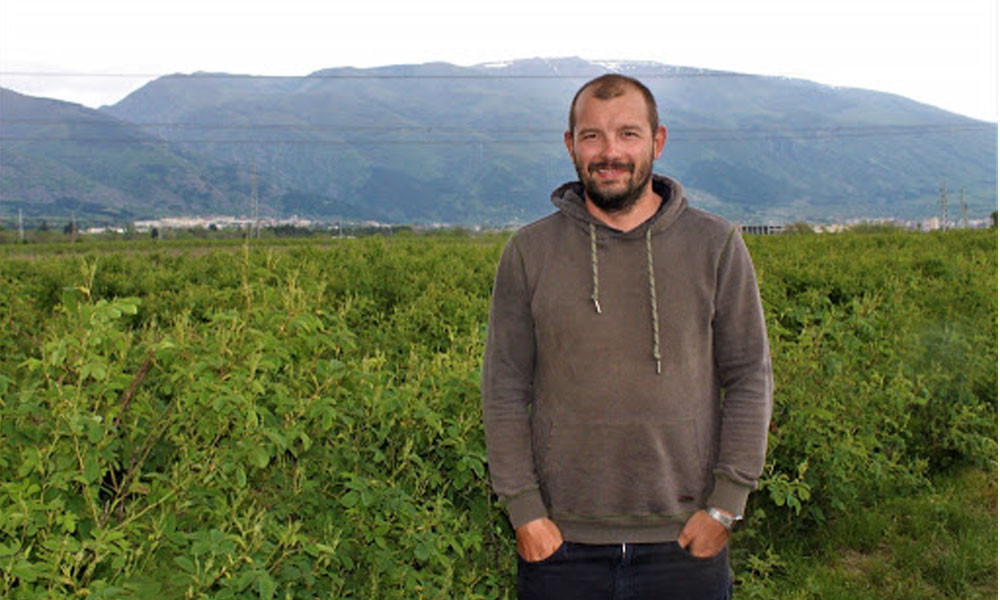
"Currently, a farmer can hardly offer more than 30-35 cents and so the workers refuse to join the rose-picking campaign. At the same time workers can go pick cherries or work in vegetable gardens, where work is easier. For many years the rose production sector was a priority for them and they preferred to pick roses because they managed to earn decent money for 5-6 hours of work. When the wage drops to 30-40 euro cents per kilogram they simply lose motivation," Chairman of the Professional Association of Rose Producers in Bulgaria, Hristo Nikolov, said in an interview with BNR -"Horizont".
There is a risk of huge areas of rose plantations remaining unharvested, while distilleries will work at half of their capacity and some will not even open. The reason is unsold produce of the 2020 campaign, when the Covid-19 pandemic prevented them from realizing their agreements in the country and abroad.
The impossibility to sell their produce will make farmers abandon part of their plantations and this brings risks, the Executive Director of the Bulgarian National Association Essential Oils, Perfumery and Cosmetics, Gergana Andreeva, said in an interview with BNR-Stara Zagora:
"Currently, out of 50,000 decares, only 10,000 have been re-cultivated and taken good care of. The plantations are being abandoned en masse. This poses risks of declining yields and lower quality of the roses, which leads to lower rose-oil quality. "

She pointed out another problem related to the increasingly clear inability of this country to sell its rose oil to world-renowned cosmetics companies:
"The state has been neglecting the industry for many years. In the past few years some work was done with the adoption of the Law on the Oil-yielding Rose, created in order to compile real data about rose growers and processing companies in this country. Everyone knows that Bulgaria is the country of roses, but in reality, the sector has not been a priority neither when it comes to funding, nor in terms of a specific strategy."
Interviews: Veselina Milanova, BNR - "Horizont" and Tanya Balabanova, BNR - Stara Zagora
Editor: Yoan Kolev
English: Alexander Markov
Photos: library

Bulgaria’s Ministry of Finance has published the draft state budget in euros for 2026. The country’s GDP is projected to reach EUR 120.1 billion, with an economic growth rate of 2.7%. Planned revenues amount to EUR 51.436 billion, or 42.8% of GDP...

In 2024, 8.2% of people aged 18 or over who declared to be at work (either employed or self-employed) in the EU were at risk of poverty, according to data from Eurostat, cited by the BNR's Horizont channel. In Bulgaria, this share reached 11.8%. The..

The two largest trade unions in Bulgaria - the Confederation of Independent Trade Unions in Bulgaria and the Confederation of Trade Unions "Podkrepa" - are organizing a warning protest in front of the Council of Ministers building. It is planned for..








 Partly Cloudy
 Mostly Cloudy
 Cloudy
 Cloudy