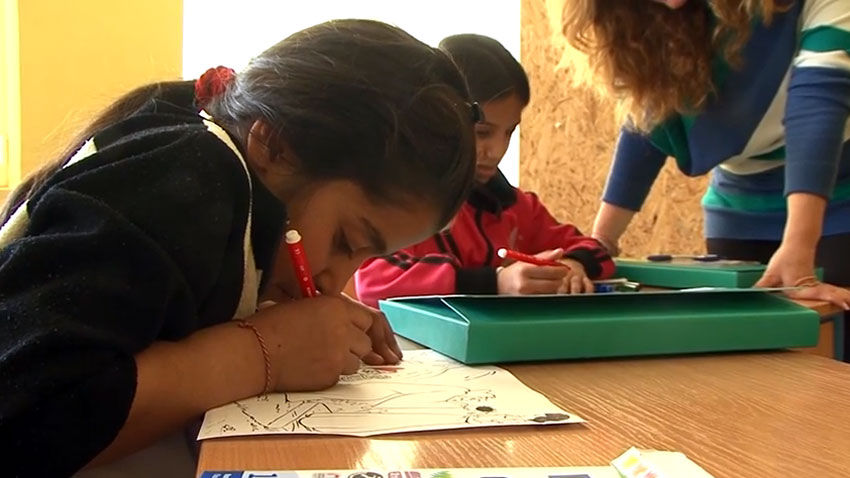
72% of Roma in Bulgaria do not know if there is a law prohibiting discrimination, reads the report "Discrimination against Roma in Croatia and Bulgaria" presented by the Amalipe Center for Interethnic Dialogue and Tolerance. 84% of the respondents do not know of any organization offering support or advice to people who have been subject to discrimination. 86% of the respondents do not even report cases of discrimination.
The main areas of most frequent discrimination are education, employment, health care and housing. However, the percentage of Roma youth who have completed secondary and higher education has increased. Spatial segregation of the Roma population is common in both countries. It is manifested in poor infrastructure and transport, lack of regulation and legal permits to build decent housing, lack of utilities and infrastructure such as electricity, water, street lighting, garbage collection and many other utilities necessary to everyday life, the report of Amalipe Center for Interethnic Dialogue and Tolerance further reads.

'The dialogue between employers and trade unions has been restored. Consultations will begin tomorrow at the Ministry of Finance to iron out all the details. The state is committed to supporting every Bulgarian citizen.' This was written by GERB leader..

Bulgarian citizens traveled abroad 829,300 times in October, which is 15% more than in October 2024 , according to the National Statistical Institute. The most popular destinations were Turkey, Greece, Serbia, Romania, Germany, North Macedonia,..

The National Assembly has introduced a new requirement for state-owned enterprises to implement corruption risk management systems, which will also include appointing an integrity officer. The measure is recommended by the Organisation for Economic..






 Mostly Cloudy
 Partly Cloudy
 Cloudy
 Fog
Fog