Increasing competitiveness of the business and introducing new growth models on the Balkans were among the topics of discussion at the EU-Southeastern Europe Summit organized by The Economist. Bulgarian Minister of Economy Bozhidar Lukarski said that the major focus of the Bulgarian government was keeping economic and financial stability:
“Our efforts for increasing growth and creating competitive economy are focused on the implementation of a few priority goals: stimulating investments aimed at development of innovation capacity; creating new products and services; introducing new and effective management methods. The constant introduction of new technologies; innovative products and services is a prerequisite for increasing competitiveness and workforce productivity, for optimizing production costs and increasing incomes. The Bulgarian economy needs a well-functioning innovation environment that provides opportunities for rapid transition to production of goods and services with high added value.”
Minister Lukarski said a proof that Bulgaria was on the right track was selecting this country for the best outsourcing destination of 2015, as well as Bulgaria’s GDP growth, which is above the EU average.
Minister of Regional Development and Public Works Lilyana Pavlova pointed out five key growth factors: political and economic stability, predictability, a clear vision and strategy for future development, result-oriented programs and projects. She told us more about new ideas for regional development of the country:
“Speaking about urban development and projects in municipalities related to urban development, competitiveness and economic activity, we have planned to create five regional funds that are directed to these projects. Initially they will total 135 million euro. A fund will be directed to projects that generate revenue and help the urban development in Sofia. There will be a fund aimed at the northern regions of Bulgaria and a fund for southern Bulgaria. There will be a guarantee fund and a fund for tourist infrastructure. It is important that we support tourism, which has huge potential for development. We have started using a new method of providing support – 50 percent grants and 50 percent invested in a fund that is to attract investments in tourism.”
Stefanos Agiassoglou, CEO of Hellenic Company for Rolling Stock Maintenance SA, pointed out the strategic place of the Balkans as one of the most important trade entries to Europe, meant that investments in good infrastructure were key to future development. According to him, it was essential to pay attention to transport, as part of economic development and growth in the Balkans. We must be more efficient and competitive, Mr. Agiassoglou added.
English: Alexander Markov
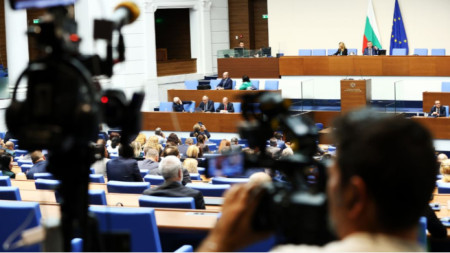
The draft state budget was adopted in first reading by the National Assembly on November 21. However, the planned changes in the financial framework for 2026 triggered an open clash between the ruling coalition, led by GERB party, and the opposition..
KBC Group expects the Bulgarian economy to grow slightly more next year in comparison to its previous forecasts, according to the conclusions of the Belgian financial group's latest assessments of the economies of Central and Eastern..
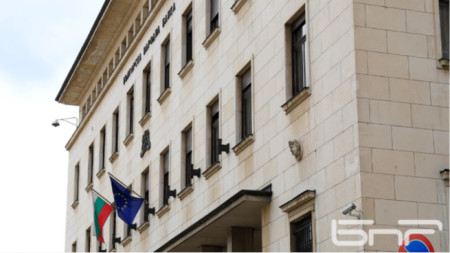
Foreign direct investment (FDI) in Bulgaria posted the largest net inflows from the Netherlands, Italy and Greece in the first half of 2025, the Bulgarian National Bank (BNB) said. Net FDI inflows totalled €554.9 million from the Netherlands, €325.2..





 Partly Cloudy
 Cloudy
 Cloudy
 Mostly Cloudy