A new master’s degree programme “Social work with refugees and migrants” opened at the Faculty of Education of Sofia University "St. Kliment Ohridski"at the beginning of the 2018-2019 academic year.
The master’s programme is being implemented with the support of the UN High Commissioner for Refugees (UNHCR) representative in Bulgaria. The period of training is two semesters, three for non-specialists. The main aim of the programme is to train specialists in the sphere of social work with refugees and migrants in spheres like housing allocation, healthcare, education, social and cultural guidance, psychosocial support etc.
“The most important thing of all is that this involves working with groups of people who are vulnerable, people who have left their countries to come to a new place, and whose basic needs have to be met, and once this is done we can start upgrading these needs,” says Prof. Siyka Chavdarova-Kostova who is in charge of the programme.
Helping begins by providing a roof, food, security, and then passes through various integration options – usually language and involvement in public life.
Nina Shisheva is one of the students enrolled in the “Social work with refugees and migrants” master’s degree programme. Before that she graduated business management in Varna. She turned to work with refugees when she felt a purely human need to help the people from the first wave of refugees in 2014-2015.
In 2016 Nina joined the social project “Refugees”, whose volunteers put their hearts and minds into helping children, youngsters and adult refugees adapt more easily to Bulgarian society – by means of Bulgarian and English language lessons, computer, gardening and music training, sports, applied sciences. That was when Nina started considering ways to continue her education in this sphere, and in 2018 she joined the first batch of students from the new master’s degree programme at Sofia University - “Social work with refugees and migrants”.
“In this master’s programme we covered the basics for working with refugees, where we discussed the problems people seeking protection encounter. We learn how to talk to them so as to find out what it is they need,” Nina Shisheva comments and adds that the refugees who choose Bulgaria are pleased because they have found a place where they feel they matter.
Translated from the Bulgarian Milena Daynova

Bulgaria celebrates National Reading Day on the third Friday of November. The Reading Foundation is leading the initiative under the motto: “Read. For Real”. According to the OECD's PISA 2022 study, 53% of 15-year-old students in Bulgaria have..
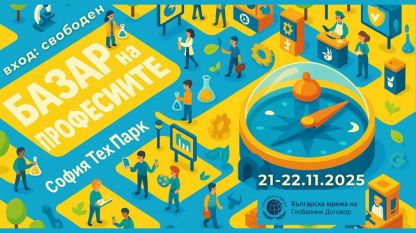
On November 21–22, 2025, the 11th edition of the Career Fair will take place at the John Atanasov Hall in Sofia Tech Park. The forum aims to support early career orientation for young people in Bulgaria and is organized by the Bulgarian Global..
From fear and doubts to joy and support – Bulgarians react differently to the upcoming introduction of the euro on January 1, 2026. For some, it is a logical step towards Bulgaria’s integration into the EU with promises of stability..




 Mostly Cloudy
 Cloudy
 Partly Cloudy