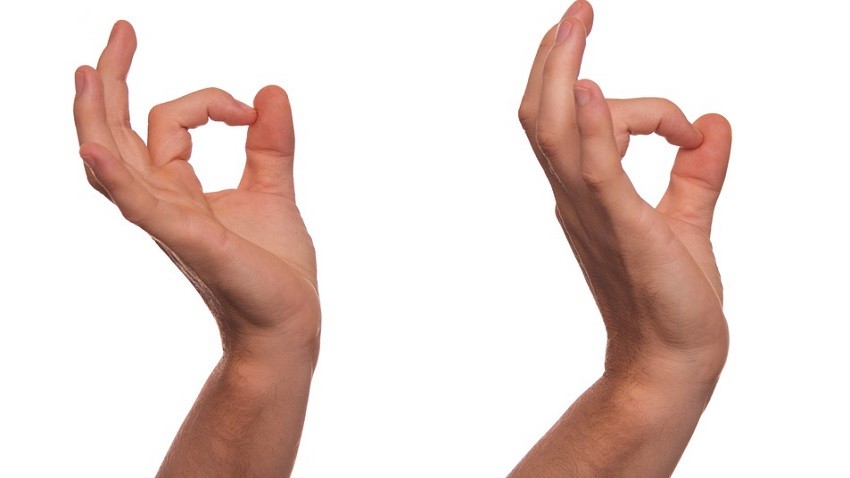
There is no official data as to the number of people with hearing impairments in this country, estimations runs to around 120,000. Most are permanently employed and are, in fact, physically healthy and creative people. To many, sign language is the principal mode of communication. That is why access to the news of the day in this language is much more than a mere whim.
In recent weeks we have seen the appearance of a sign language interpreter in the central news bulletins of national TV stations in Bulgaria. The role of these interpreters has grown all the more important since a state of emergency over Covid-19 was imposed in the country, with the information about the measures and the crisis affecting us all.
There are around 200 trained sign language interpreters in Bulgaria but only 20 actually practice it. Schools, universities, medical establishments are difficult of access to people with impaired hearing.
 “But there is a way to make such accessibility available, as long as the necessary administrative measures for training are taken,” says Sylvia Marinova, one of the most experienced sign language interpreters in the country.
“I have more than 30 years of experience as a sign language interpreter and what I would like to state is that deaf people have always been left somewhere in the periphery of our society. Nobody appreciated how important it is to be able to hear. Hearing is one of the leading sensory organs and it plays a leading role in all people’s mental health. This segment of society consists of voters as well as taxpayers. They need, they are entitled to obtain information, to being educated in their language, the language they understand best. I know that for one year the Ministry of Education, and 20 organizations of people with impaired hearing, have been working hard to draft a law on sign language. If such a law is adopted soon that would guarantee their rights to information accessible in their language.”
Since 13 March Sylvia Marinova’s life changed significantly because since early morning she has to interpret, on air, the stream of news which directly affects our lives:
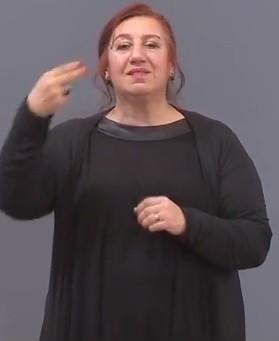 “I get up early, at 5, so as to be able to get some exercise, marshal my thoughts and get in good form for the translation. At 7.30 I have to be in the Council of Ministers building for the regular briefing. My work day continues as an interpreter for the news at one of the leading national TV stations. When I get home I get video calls from different groups of deaf people and I do what I can to help. Because social isolation, shutting ourselves up at home, all of this disturbing news affect people with impaired hearing in exactly the same way. They are no different from any of us, but they do have one big problem – accessing information in their own language. There are people who ask us about things they have not understood, things that affect them personally. These people have additional qualities which make up for the lack of hearing, they are capable of working at full capacity and are extremely detail-oriented. They deserve more respect because they are exceedingly diligent and trustworthy. To deprive them of the right to obtain timely information, to be trained and educated by means of sign language is like taking the white cane from a blind man. Until recently society didn’t realize just how important sign language interpretation is for these members of society.”
Bulgaria celebrates National Reading Day on the third Friday of November. The Reading Foundation is leading the initiative under the motto: “Read. For Real”. According to the OECD's PISA 2022 study, 53% of 15-year-old students in Bulgaria have..
On November 21–22, 2025, the 11th edition of the Career Fair will take place at the John Atanasov Hall in Sofia Tech Park. The forum aims to support early career orientation for young people in Bulgaria and is organized by the Bulgarian Global..
From fear and doubts to joy and support – Bulgarians react differently to the upcoming introduction of the euro on January 1, 2026. For some, it is a logical step towards Bulgaria’s integration into the EU with promises of stability..




 Cloudy
 Partly Cloudy
 Fog
Fog Clear
Clear Mostly Cloudy
 Overcast, rain
 Thunderstorms