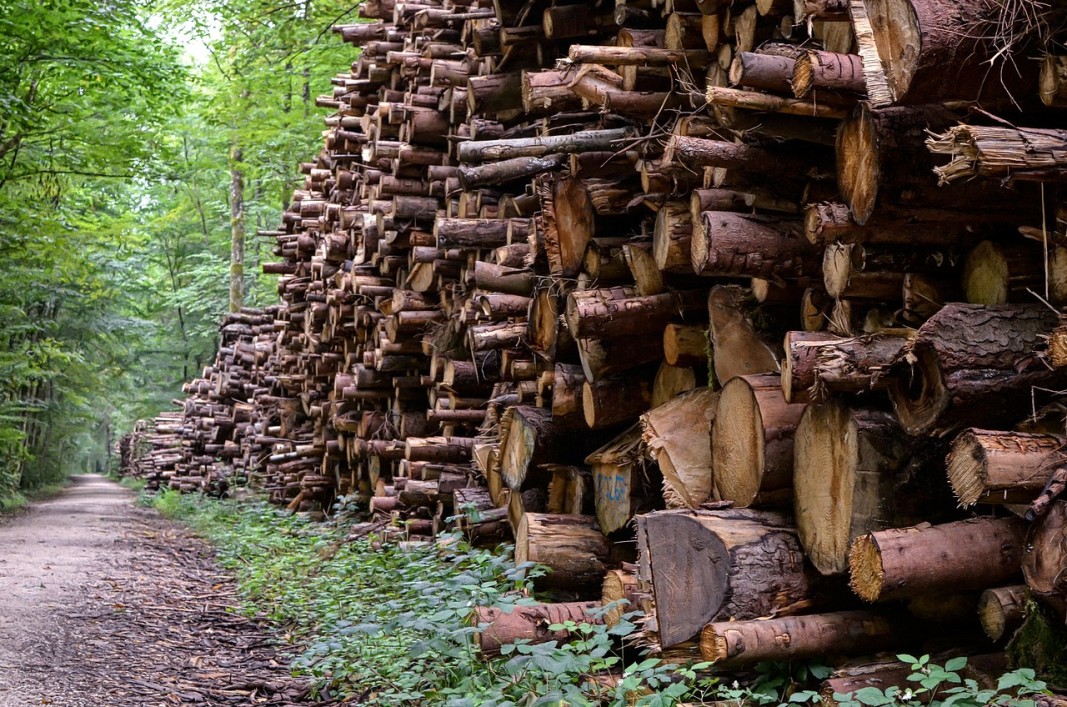
The annual volume of illegal logging in this country has reached 2.7 million cubic metres of timber, and this means one-third of all logging, according to the latest analysis by the World Wildlife Fund from 2018. The nature conservation organization is currently working on a new report, to be released in mid-2023, which will reveal what the current extent of illegal logging is.
Dobromir Dobrinov, WWF senior environmental legislation expert, says he is not expecting there to be any change in the extent of illegal logging in the country.
“The practices we are seeing, along with the breaking of the existing laws and regulations, lead us to believe there will be no tangible changes,” he says in an interview with Radio Bulgaria. “Maybe in the details, resulting from the changes on the market, especially this past year. However, the flaws identified and the proposals made for improving the overall enforcement of the law have not been complied with, so we cannot expect any tangible drop in numbers. The latest analysis indicates a sustained tendency through the years - around 30% of the timber is being logged illegally.”
Dobromir Dobrinov enumerates the “principal evils” of illegal logging: felling of unmarked trees, unlicensed logging, transporting lumber without the required document, manipulating the lumber quality and quantity.

“Even though GPS tracking devices were put on the vehicles transporting lumber, they are not being used,” the expert goes on to say. “These devices are supposed to provide data in real time, so that the regional directorates can track them, but in reality the technical resources are ancient and not everybody is using this system. This means one transport ticket can be used for several journeys, making all kinds of manipulation possible.”
Every year, forestry’s “rogue” sector generates hidden revenues running to almost 150 million Leva, with the help of 50,000-80,000 active logging sites, says Dobromir Dobrinov, and adds that one of the factors bolstering the extent of this phenomenon is that control functions get mixed up with the economic functions of the Ministry of Agriculture.
The instances of illegal logging that reach the prosecutor’s office are mostly connected with what is known as timber poaching, committed mostly by people who are socially disadvantaged, Dobromir Dobrinov goes on to say.

“The state machinery is clogged up with cumbersome procedures over very small quantities,” he explains. “At the same time the cases the prosecutor’s office ought to be investigating – companies exceeding the permitted logging volumes by more than 500, sometimes even 1,000 cubic metres – are not being referred to the structures of the Executive Forest Agency, and no sanctions are imposed.”
Besides inflicting colossal financial losses, logging has serious consequences for the environment, changing the habitats of protected animals, cutting off important bio-corridors, extinction of species. soil erosion. What can we expect if we continue to be so careless about nature?
“What we can expect are calamities,” is Dobromir Dobrinov’s succinct answer. “It is a very sad thing that the authorities always tend to act after the fact. Nine-day wonder, as they say – action is only taken when people get hurt or killed, and then everything is forgotten. And the authorities continue in their rut of total lack of concern and failure to resolve long-standing problems. Then along comes a calamity somewhere else and off they go again, putting out fires – we’ll help people, we’ll find the guilty party, but usually they don’t. And this is repeated – over and over again.”
Photos: Pixabay, archive
Timișoara, a large multicultural city in western Romania, is the center of the historical community of the Banat Bulgarians . The members of this community are descendants of settlers from the Bulgarian lands nearly three centuries ago, who have..

In Gabrovo – a city in the geographical center of Bulgaria, once described as the Bulgarian Manchester, but today facing demographic challenges – there are young people who believe that the future can be better and that this largely..

For 15 years, Stela Nedkova has been living in Brussels . After completing her education in Bulgaria, she decided to test herself in a different reality to see whether she could handle life’s challenges on her own, without her parents’ help. Stela faced..






 Cloudy
 Mostly Cloudy
 Partly Cloudy
 Fog
Fog