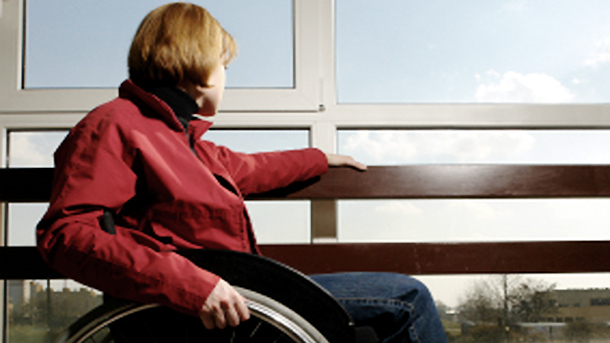
Blurred vision, feeling of weakness in the limbs, loss of balance, numbness and pain in the muscles - this is just a small part of the symptoms that multiple sclerosis sufferers experience. The disease affects mainly young people between 20 and 40 years of age, as its underlying cause has not yet been conclusively identified by science. Curiously, this autoimmune disease bypasses some ethnic groups such as Roma, colored people and Eskimos. Bulgarians are affected equally with other European nations, for every 100 thousand people, 100 develope autoimmune disease.
The reason to talk about Multiple Sclerosis is May 27, the World MS Day, which has been observed in Bulgaria for the past six years to show that among us there are patients and physicians who are fighting a battle with the insidious disease every day. "Over the past decade there are significant achievements in medicine that have been rapidly implemented in Bulgaria. We have a large resource of medication, but it is time to work for the improvement of the social policy which would ensure a decent life for patients, and they are more than 5,000 in Bulgaria,” says Desislava Rayanova, chairperson of the association of patients with multiple sclerosis.
As with all MS patients, the disease changed her life unexpectedly. When she felt the first signs, she was 33 years old and worked high in the hierarchy of public administration. First she felt numbness in her hand, but paid no attention. After months a sensation of weakness in the legs appeared. Following an MRI, the diagnosis for multiple sclerosis was revealed. "I was not myself, but I had to get home to share with family and on the following day to get hospitalized," Desislava Rayanova recalls.
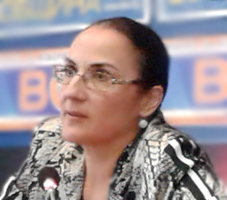 "From the shocking moment when you learn the diagnosis MS, you ask yourself what your employer would say, what your friends would think of you when they learn about the disease. But then I decided that there was no reason to hide that I am sick and feel a sense of guilt. I was convinced that if I speak out, others will see that I am the same person and I am no different after the diagnosis. It is true that now I have a little difficulty in walking, but it is not so important, I'm not a dancer by profession. Every day I do my duties in the administration and I think I'm a decent citizen of this country. By personal example, I try to change the opinion of employer organizations and make them believe that people diagnosed with MS are complete and capable of working. I have been with this diagnosis for 15 years now and during that time I completed a second higher education degree, I work in a large department with many responsibilities and workload. Except for dealing with my official duties, I also deal with public work as chairperson of the Patients Association. I use my lunch break to communicate with patients who are newly diagnosed. At that time most people are stressed, they feel stunned and confused. The first problem we face is not whether they will have access to good treatment but whether they can maintain their employment. This is about young people of working age, with a variety of professions. There are doctors, lawyers, artists, journalists, etc. So over 50% of them do not share with their employer about the disease, they fear remaining without work. So far, the data are not optimistic, only 5% of MS patients in Bulgaria have a permanent job. The reason is the misunderstanding and bias against the manifestations of the disease. But the truth is that after 2002 Bulgaria already applies adequate treatment at a world level. Wheelchairs that used to be associated with MS patients in the past are now long gone. If treatment has started in time, people remain fully mobile and in working capacity for years. Most patients are married, they have a home, pay bank loans, fees and taxes to the state. It is high time that we paid attention to the potential that these people have, particularly against the background of deepening demographic crisis and the lack of manpower in the labor market."
English Rossitsa Petcova

The diplomas from the 11th master class in radio journalism of the Bulgarian National Radio – BNR Academy were awarded at a solemn ceremony on November 14. The lectures and practical classes in modern forms of radio journalism build on the professional..
Italy investigates claims of hunting of people in Sarajevo in the 1990s The prosecutor's office in Milan has launched an investigation into shocking reports of organized "sniper safaris" in Bosnia during the war in..
Albania and Bulgaria have joined forces in the name of one more child being born. In the late afternoon of November 7, the first-ever free reproductive medicine checkups, led by Bulgarian specialists, began in the Albanian town of Korçë — a region..






 Mostly Cloudy
 Partly Cloudy
 Cloudy